Understanding the Hair Growth Cycle: What Everyone Over 30 Should Know About Thinning Hair
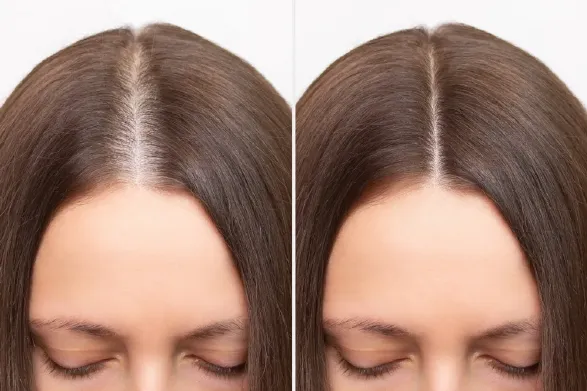
If you’re over 30 and starting to notice your hairline creeping back or your once-thick ponytail getting thinner, you’re not alone. Hair thinning is a common concern for both men and women as we age. The good news? Understanding how your hair grows (and sometimes stops growing) is the first step toward choosing natural products that truly support healthy, vibrant hair — like KelpVital.
Let’s dive into the basics of the hair growth cycle, and what you can do to support it.
The 4 Phases of Hair Growth
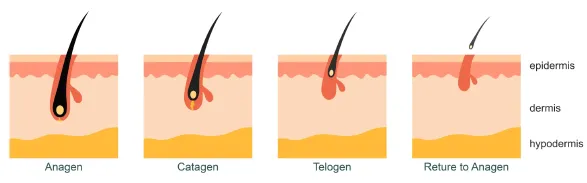
Hair doesn’t grow all at once — instead, it follows a repeating cycle made up of four key phases:
1. Anagen Phase (Growth Phase)
This is when your hair is actively growing. It lasts anywhere from 2 to 7 years, depending on your genetics, age, and overall health. Around 85-90% of the hairs on your head are in this phase right now (Randall, 2008).
2. Catagen Phase (Transition Phase)
This short, two-to-three-week phase is when hair growth slows, and the hair follicle shrinks. Only about 1% of your hair is in this phase at any time (Paus & Cotsarelis, 1999).
3. Telogen Phase (Resting Phase)
Here, hair isn’t growing, but it’s also not falling out. It just “rests” for about 3 months. About 10-15% of your scalp hairs are in this phase. Stress, poor diet, or hormonal changes can push more hairs into this stage prematurely — leading to shedding (Trueb, 2003).
4. Exogen Phase (Shedding Phase)
This is when the hair finally falls out, making room for new strands to grow. It’s normal to lose 50 to 100 hairs a day, but if you’re noticing more shedding than usual, it could signal an imbalance in this cycle (American Academy of Dermatology Association).
Why Hair Thinning Increases After 30
Several factors start to work against us in our 30s: • Hormonal shifts, like lower estrogen or testosterone imbalances • Slower cell regeneration • Nutritional deficiencies (especially in iron, biotin, and iodine) • Stress and poor sleep • Exposure to environmental toxins
Over time, these changes can shorten the anagen (growth) phase and increase time spent in the telogen (resting) phase — meaning hair grows slower and falls out faster.
Can Natural Products Like KelpVital Really Help?
Yes — but it’s all about the ingredients. KelpVital is packed with natural marine nutrients that target the root cause of hair cycle disruption, rather than just masking the symptoms.
Here’s how kelp-based ingredients support the hair growth cycle:
• Anagen Stage: The hair matric cells become activated, and the hair becomes thicker and stronger. • Return to Anagen faster: The dormant period between Exogen and Anagen becomes shorter. Fucoidan, a natural compound found in brown seaweed shown to stimulate dermal papilla cells (the “brain” of the hair follicle) (Fitton et al., 2015). • Calming Scalp: Kelp polysaccharides and sugarcane-derived butylene glycol help reduce inflammation in the scalp, making it easier for hair to grow uninterrupted.
A well-nourished scalp is like healthy soil — it creates the perfect environment for new hair to thrive.
What Else Can You Do To Support Hair Growth Naturally?
In addition to using topical products like KelpVital, you can support your hair growth cycle with these lifestyle habits:
• Eat a nutrient-rich diet: Focus on foods with protein, iron, omega-3s, and antioxidants. • Massage your scalp regularly: Increases blood flow and stimulates follicles. • Reduce stress: Try yoga, meditation, or just a daily walk to calm your nervous system. • Avoid harsh chemicals: Sulfates, parabens, and synthetic fragrances can irritate the scalp and weaken follicles.
Final Thoughts: Give Your Hair the Natural Boost It Deserves
If your hair is thinning, you’re not imagining it — and you’re definitely not alone. The key to regrowth isn’t a quick fix, but a long-term approach that respects your body’s natural cycles. Supporting your hair health from the root — both figuratively and literally — with a product like KelpVital is a smart, natural way to nourish your scalp and follicles as they age.
Your hair deserves the same kind of holistic care you give to the rest of your body. And now that you understand the science behind it, you’re better equipped to give it just that.
References
1. Fitton, J. H., Stringer, D. N., & Karpiniec, S. S. (2015). Therapies from fucoidan: An update. Marine Drugs, 13(9), 5920–5946. https://doi.org/10.3390/md130905920 2. American Academy of Dermatology. (n.d.). Hair shedding: What you should know. https://www.aad.org/public/diseases/hair-loss/insider/shedding 3. Kanti, V., Grimalt, R., Mezouar, N., & Tosti, A. (2018). A randomized investigator-blinded study to assess the efficacy and safety of a nutraceutical in subjects with hair loss. Journal of Clinical and Aesthetic Dermatology, 11(10), 29–34. 4. Paus, R., & Cotsarelis, G. (1999). The biology of hair follicles. New England Journal of Medicine, 341(7), 491–497. https://doi.org/10.1056/NEJM199908123410706 5. Randall, V. A. (2008). The hormonal regulation of hair growth. In D. A. Norris & S. P. Lynch (Eds.), Principles of Dermatology (4th ed., pp. 193–202). Saunders. 6. Trueb, R. M. (2003). Molecular mechanisms of androgenetic alopecia. Experimental Gerontology, 37(8-9), 981–990. https://doi.org/10.1016/s0531-5565(02)00199-4