Why Scalp Health Is the Key to Hair Growth
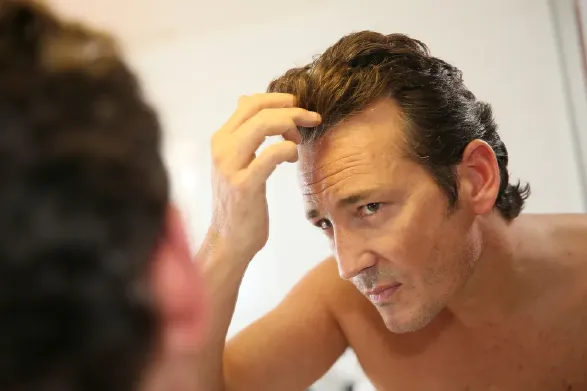
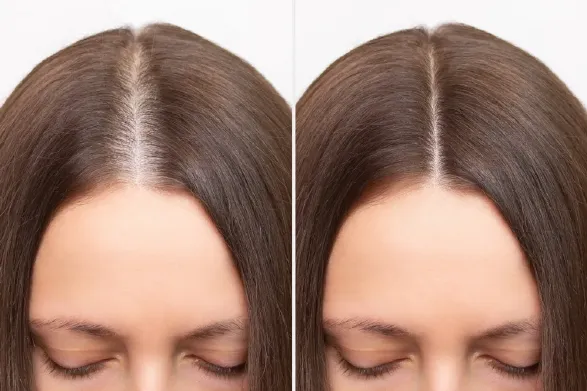
If your hair has been feeling thinner, flatter, or just notas full of life lately, you’re definitely not alone. More than half of men and women will face some level of hair thinning during their lifetime (Grand View Research, 2022). And while it’s tempting to reach for thickening sprays or miracle serums, the real secret to healthier, fuller hair might be hiding in plain sight: your scalp.
Your Scalp: The Unsung Hero of Hair Growth
Think of your scalp as the soil in which your hair grows. It’s home to blood vessels, oil glands, and hair follicles—all of which work together to fuel hair growth. Hair doesn’t grow in a straight line either; it moves through a natural cycle of growing (anagen), slowing down (catagen), and resting (telogen). When your scalp is balanced and well-cared for, this cycle runs smoothly (Trüeb, 2003).
Scalp Conditions That Disrupt Growth
Sometimes, your scalp sends subtle signs that something’s off. If you’re noticing itching, flaking, or unusual hair loss, it could be due to: • Seborrheic dermatitis or psoriasis – These conditions can cause buildup and inflammation that block hair follicles. • Genetic hair thinning (androgenetic alopecia) – Often driven by hormones, this type of thinning results in gradually finer hair. • Alopecia areata – An autoimmune condition where the body mistakenly targets hair follicles, causing patchy loss. If any of this sound familiar, it’s worth having a chat with a dermatologist. The earlier you get clarity, the better the outcomes.
Why Circulation Matters for Hair Growth
Hair follicles rely on a steady stream of nutrients—oxygen, amino acids, and vitamins—to thrive. These nutrients are delivered through your bloodstream, not from the air, which is why good circulation is essential. When blood flow is poor, follicles may receive less nourishment, weakening their ability to sustain growth. To boost microcirculation, regularly massage your scalp. This not only helps distribute natural oils evenly but also stimulates blood flow to the follicles, enhancing absorption and revitalizing the scalp at its foundation (Healthline, 2020).
Emerging Therapies and What the Research Says
While topical treatments and shampoos help, scientific advances offer more options: • Low-Level Laser Therapy (LLLT): This involves red light devices that stimulate hair follicles and increase blood flow. Studies have shown positive results in both men and women with androgenetic alopecia (Avci et al., 2014). • Platelet-Rich Plasma (PRP): PRP therapy utilizes a person’s own blood, concentrated to enhance growth factors, and is injected into the scalp. Research supports its effectiveness in increasing hair density (Gentile et al., 2015). • Microneedling: Tiny needles stimulate the scalp, enhancing the absorption of topical treatments and promoting collagen production.
Is Wearing a Hat Every Day Bad for Your Scalp?
Wearing a baseball cap or beanie regularly is not automatically harmful. Since hair follicles receive oxygen from the bloodstream, not from the air, your scalp does not “suffocate” under a hat. However, problems can arise if: • The hat is too tight and causes pressure or friction along the hairline. • It traps heat and sweats, disturbing your scalp’s microbiome. • It’s worn daily without being washed, leading to bacterial buildup. In short: hats are fine, but give your scalp breathing room now and then, keep your headwear clean, and support scalp health with proper hygiene.
Inflammation: The Hidden Disruptor
Although it may not be visible, chronic inflammation can quietly undermine hair growth by shortening the growth phase. Common triggers? UV damage, harsh shampoos, stress, and product buildup. Using calming, pH-balanced products and limiting exposure to harsh chemicals can help reduce this low-grade irritation (Trüeb, 2006).
Eat—and Apply—What Your Scalp Loves
What you eat shows up on your scalp, but topical nourishment plays an equally important role. Key nutrients for healthy hair growth include: • Biotin – Key for keratin strength. • Zinc – Essential for repair and immune support. • Iron – Crucial for oxygen delivery to follicles. • Omega-3s – Fight inflammation and promote hydration. • Kelp – A sea-based super ingredient packed with minerals, antioxidants, and polysaccharides. These compounds help combat oxidative stress, hydrate the scalp, and support skin cell vitality.
Talk to a dermatologist or trichologist about targeted products or supplements, especially if you’re experiencing significant hair loss.
A Real Case: Targetoid Hair Regrowth in Alopecia Areata
A 39-year-old woman presented with a two-month history oftwo hairless patches on her scalp. Upon examination, she was diagnosed with alopecia areata, an autoimmune condition where the body’s immune system attacks hair follicles, leading to hair loss. Notably, during her treatment, she exhibited a unique “targetoid” pattern of hair regrowth, characterized by concentric rings of hair regrowth within the bald patches. This pattern is rare and highlights the unpredictable nature of hair regrowth in alopecia areata. The case highlights the importance of individualized treatment approaches and underscores the need for further research into the mechanisms underlying hair regrowth patterns in autoimmune hair loss conditions (Kim et al., 2023).
Final Thoughts
Healthy hair starts with a thriving scalp. Whether you’re noticing early signs of thinning or want your hair to feel fuller and more vibrant, nurturing your scalp is the most grounded place to begin. With the proper care, professional guidance, and emerging therapies, you can support stronger, more resilient hair, right from the root.
References
1. Grand View Research. (2022). Hair Restoration Market Size, Share & Trends Analysis Report. Retrieved from https://www.grandviewresearch.com/ 2. Trüeb, R. M. (2003). Association between smoking and hair loss: another opportunity for health education against smoking? Dermatology, 206(3), 189-191. 3. Trüeb, R. M. (2006). The value of scalp health for hair growth: new treatments and techniques. International Journal of Trichology, 2(1), 2-7. 4. Polak-Witka, K., Rudnicka, L., Blume-Peytavi, U., & Vogt, A. (2020). The role of the microbiome in scalp disorders. Dermatologic Therapy, 33(6), e14030. 5. Healthline. (2020). Scalp Massage for Hair Growth: Does It Really Work? Retrieved from https://www.healthline.com/health/scalp-massage-for-hair-growth 6. Avci, P., Gupta, A., Clark, J., Wikonkal, N., & Hamblin, M. R. (2014). Low-level laser (light) therapy (LLLT) for treatment of hair loss. Lasers in Surgery and Medicine, 46(2), 144-151. 7. Gentile, P., Garcovich, S., Bielli, A., Scioli, M. G., Orlandi, A., & Cervelli, V. (2015). The effect of platelet-rich plasma in hair regrowth: a randomized placebo-controlled trial. Stem Cells Translational Medicine, 4(11), 1317-1323. 8. Kim, D. H., Son, J. Y., & Lee, W. J. (2023). Targetoid hair regrowth pattern in alopecia areata: a rare clinical finding. Clinical and Experimental Dermatology, 48(3), 413–414.