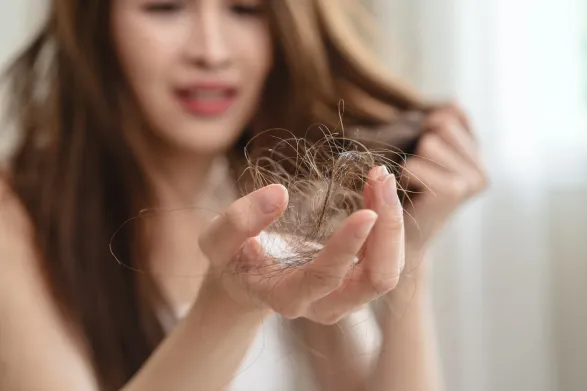
Hair loss, medically known as alopecia, is a widespread condition affecting millions of people globally. It can significantly impact a person’s self-esteem, social interactions, and overall well-being. Understanding the root causes of hair loss and how the hair growth cycle functions is essential for effective prevention and treatment.
Understanding the Hair Growth Cycle
To grasp the reasons behind hair loss, we must first explore the hair growth cycle, which occurs in three phases: • Anagen Phase (Growth Phase): This active phase lasts between 2 to 7 years, where hair grows approximately half an inch per month (Paus & Foitzik, 2004). • Catagen Phase (Transition Phase): A short phase of about two weeks during which hair follicles shrink, and hair growth slows. • Telogen Phase (Resting Phase): This three-month phase concludes with hair shedding and the start of a new growth cycle (Al-Nuaimi et al., 2010).
Disruptions in any of these stages can lead to excessive hair shedding or hindered regrowth.
Common Causes of Hair Loss
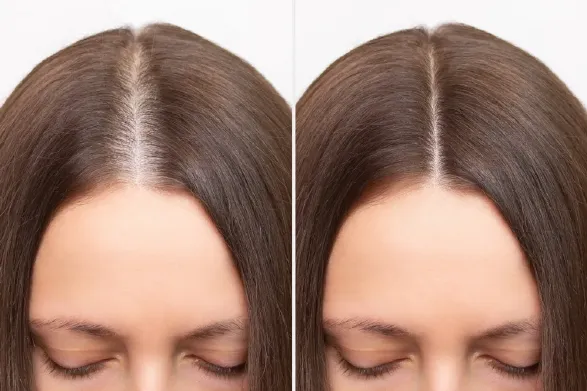
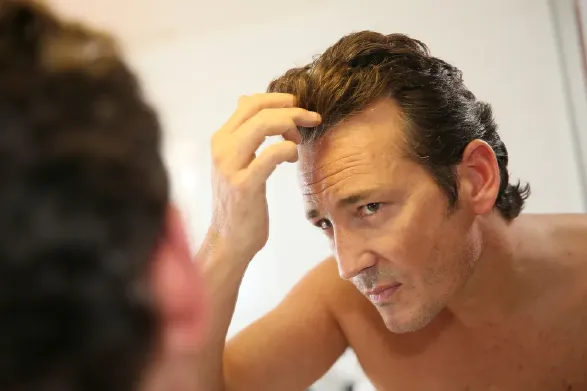
1. Genetic Factors Androgenetic alopecia (pattern baldness) is the most common form of hair loss and is genetically determined. It involves heightened sensitivity to androgens and results in a receding hairline and bald patches in men and thinning at the crown in women (Hoffmann, 2003).
Gender Differences: Hormonal differences cause varying hair loss patterns. Estrogen provides some protection to women’s hair follicles, which may explain why female pattern hair loss becomes more noticeable after menopause (Messenger & Sinclair, 2006; Hirsso et al., 2007). The emotional toll is often greater on women due to societal beauty standards (Hunt & McHale, 2005).
2. Hormonal Changes and Medical Conditions Conditions such as pregnancy, childbirth, menopause, and thyroid disorders can affect the hair growth cycle, causing temporary or even chronic hair loss (Harries & Messenger, 2017).
3. Autoimmune Disorders In alopecia areata, the immune system attacks hair follicles, leading to patchy hair loss. This condition is often associated with other autoimmune diseases and has both genetic and environmental triggers (Hordinsky & Ericson, 2014).
4. Nutritional Deficiencies Deficiencies in protein, biotin, iron, vitamin D, zinc, and other nutrients can impair hair growth. For instance, iron deficiency can result in telogen effluvium, characterized by widespread hair shedding (Malkud, 2015).
5. Stress and Lifestyle Factors Chronic stress can prematurely push hair into the telogen phase, leading to telogen effluvium. Additionally, smoking and heavy alcohol use may elevate androgen levels, worsening hair thinning (Hirsso et al., 2007; Malkud, 2015).
6. Medications and Treatments Chemotherapy targets rapidly dividing cells, including those in hair follicles. Other medications like antidepressants and beta-blockers can also trigger hair shedding (Harries & Messenger, 2017).
7. Hair Care Habits Hairstyles that pull tightly on hair (like braids or ponytails) can cause traction alopecia. Overuse of heat styling tools and harsh chemical treatments also damages hair structure over time (Messenger & Sinclair, 2006).
Psychological Impact of Hair Loss
Hair loss affects more than just physical appearance. Many individuals experience anxiety, reduced confidence, and social withdrawal due to hair thinning or baldness (Hunt & McHale, 2005).
Prevention and Treatment Options
• Medical Treatments: FDA-approved treatments like minoxidil and finasteride have shown efficacy in slowing and sometimes reversing androgenetic alopecia (Suchonwanit, Thammarucha, & Leerunyakul, 2019). • Nutritional Support: Supplements containing biotin, B vitamins, zinc, iron, selenium, protein, and omega-3 fatty acids can improve hair strength and growth (Malkud, 2015). • Stress Management: Activities such as yoga, meditation, and regular exercise help manage stress-induced hair loss. • Hair-Friendly Habits: Use gentle styling techniques, avoid tight hairstyles, and limit chemical treatments to prevent breakage and traction alopecia. • Professional Consultation: Visit a dermatologist or healthcare provider for persistent or unexplained hair loss to ensure proper diagnosis and treatment.
Conclusion
Hair loss is influenced by a combination of genetics, hormones, nutrition, stress, and external factors. Identifying the cause is crucial to finding an effective solution. Understanding the hair growth cycle and taking proactive steps can significantly improve hair health and quality of life.
References
1. Al-Nuaimi, Y., Baier, G., Watson, R. E. B., Chuong, C. M., & Paus, R. (2010). The cycling hair follicle as an ideal systems biology research model. Journal of Investigative Dermatology Symposium Proceedings, 15(1), 17–26. https://doi.org/10.1038/jidsymp.2010.7 2. Paus, R., & Foitzik, K. (2004). In search of the “hair cycle clock”: a guided tour. Differentiation, 72(9–10), 489–511. https://doi.org/10.1111/j.1432-0436.2004.07209004.x 3. Hoffmann, R. (2003). Male androgenetic alopecia. Clinical and Experimental Dermatology, 27(5), 373–382. https://doi.org/10.1046/j.1365-2230.2002.01080.x 4. Harries, M. J., & Messenger, A. G. (2017). Diffuse hair loss: its triggers and management. Clinical and Experimental Dermatology, 42(5), 468–474. https://doi.org/10.1111/ced.13145 5. Hordinsky, M. K., & Ericson, M. E. (2014). Autoimmune disease and hair loss. Dermatologic Clinics, 31(1), 75–82. https://doi.org/10.1016/j.det.2012.08.010 6. Malkud, S. (2015). Telogen effluvium: A review. Journal of Clinical and Diagnostic Research, 9(9), WE01–WE03. https://doi.org/10.7860/JCDR/2015/15219.6432 7. Suchonwanit, P., Thammarucha, S., & Leerunyakul, K. (2019). Minoxidil and its use in hair disorders: A review. Drug Design, Development and Therapy, 13, 2777–2786. https://doi.org/10.2147/DDDT.S214907 8. Hirsso, P., Rajala, U., Hiltunen, L., Jokelainen, J., Keinänen-Kiukaanniemi, S., Näyhä, S., & Laakso, M. (2007). Obesity and low-grade inflammation among men with self-perceived thinning of scalp hair. European Journal of Dermatology, 17(6), 542–546. https://doi.org/10.1684/ejd.2007.0271 9. Hunt, N., & McHale, S. (2005). The psychological impact of alopecia. BMJ, 331(7522), 951–953. https://doi.org/10.1136/bmj.331.7522.951 10. Messenger, A. G., & Sinclair, R. D. (2006). Follicular miniaturization in female pattern hair loss: Clinicopathological correlations. British Journal of Dermatology, 155(5), 926–930. https://doi.org/10.1111/j.1365-2133.2006.07415.x